E D G E S
A Blog About Painting & Life by Chris Rapa
Easel to the Eastern Shore; notes from the Waterfowl Festival
I was gifted an education in duck decoy carving, collecting, and critiquing. I learned about the lineage of legendary carvers, and was astonished at this world within a world that I knew so little about. I learned that these beautifully carved birds can fetch tens of thousands of dollars. Six figures, even. Entire college educations, whittled into wood.
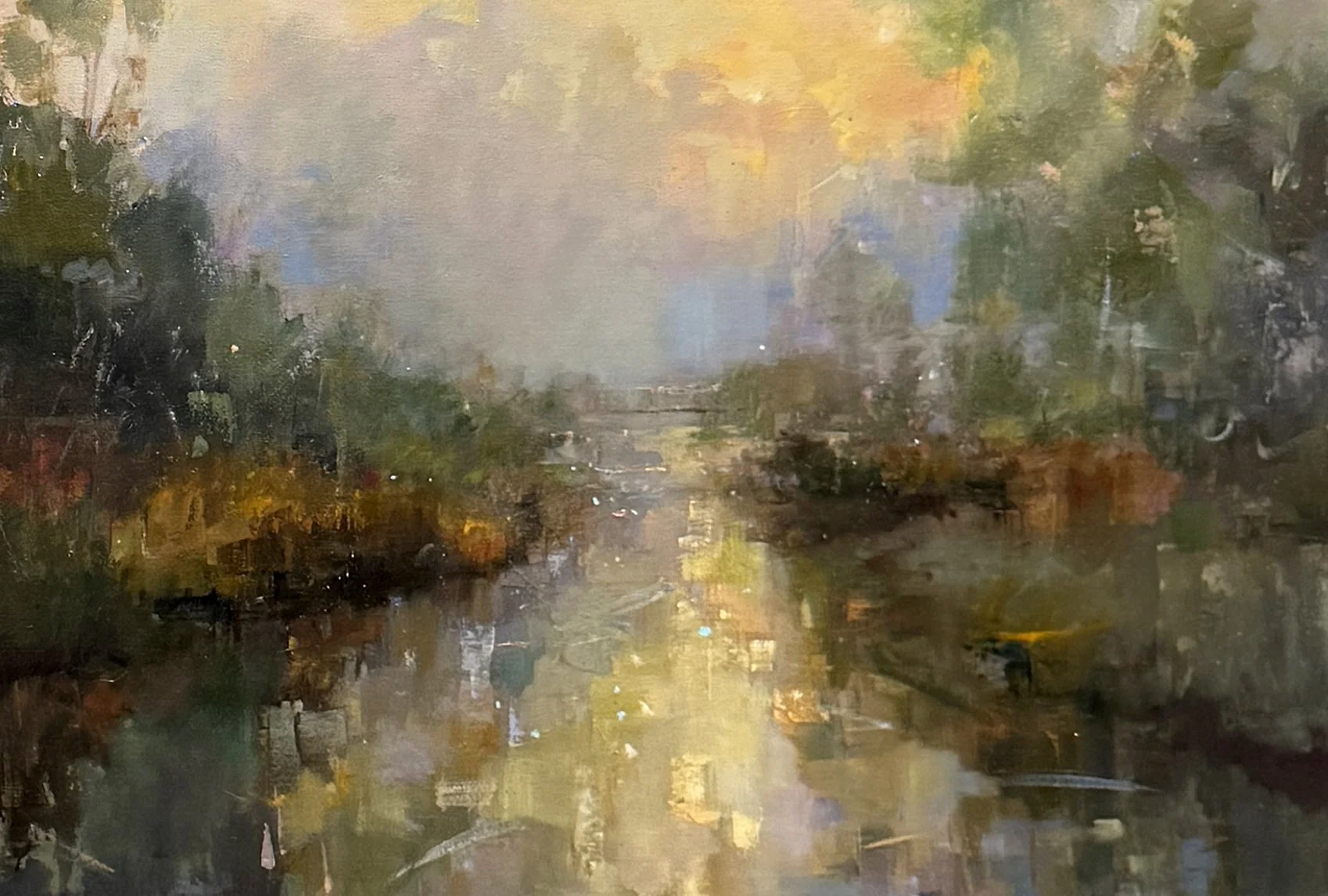
Magic in the Mist, Oil, 40 × 30, Oil Sold
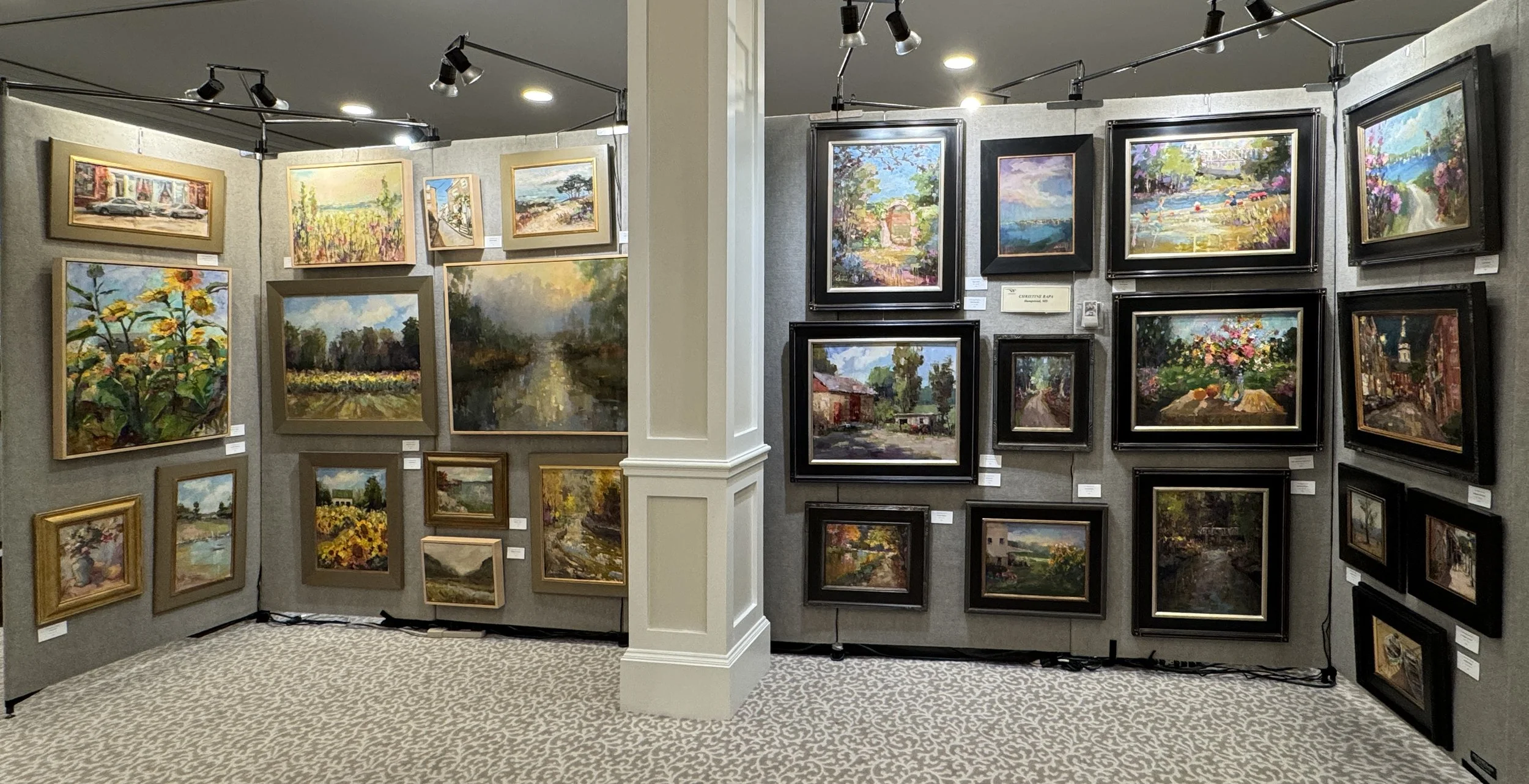

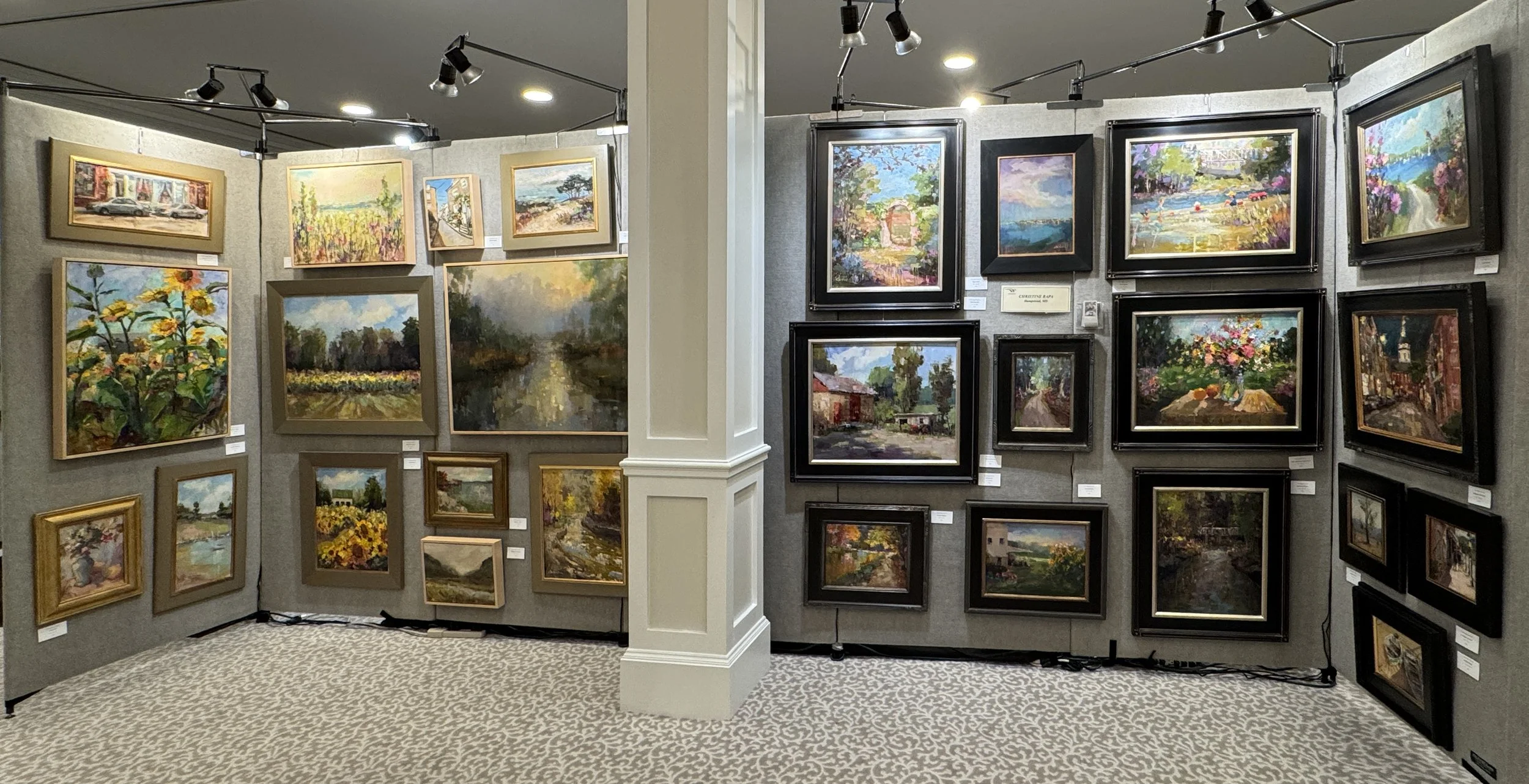
I was in the beautiful Frampton Building with great company and amazing light.
Dear friends,
This past weekend I had the honor of showing my artwork at the Historic Waterfowl Festival in Easton, Maryland. The Festival is a beloved celebration of ducks, decoys, birds of all allegiances, and every version of Labrador Retriever known. Imagine an art show transposed upon a Norman Rockwell painting, where cobblestone sidewalks are lined with antique shops and art galleries. Friends, neighbors, and visitors from near and far meander shoulder to shoulder, eating crab cakes and corn chowder, some discussing the migratory patterns of canvasbacks, others on the hunt for a six foot bronze casting of a Grey Heron, and all of them being lovingly pulled along by a dog. Retrievers are preferred, but not a requirement to enter. It's Crufts of the Chesapeake here, with pooches representing all ages, weights, colors, and temperaments, some decked out in Camo, others in knits with fur colors (yes, we’re still talking about the dogs). And art. So much art. This is the Waterfowl Festival.
But how did I end up there? Good Question. As many of you know, I do not paint waterfowl. I don’t paint birds of any stripe. I paint landscapes, mostly on location, or as we say when we are feeling French, “en plein air.” Add birds? I could, but I generally have my hands full just getting gist of a place while dodging sunburn and ticks. Still, my artist friends, veterans of the event, suggested that the art committee wanted to broaden their offerings. So, I applied, was accepted, and said yes, because who turns down a prestigious invitation, even if you don’t know your mallards from your mud hens? I am teachable I thought—I can learn.
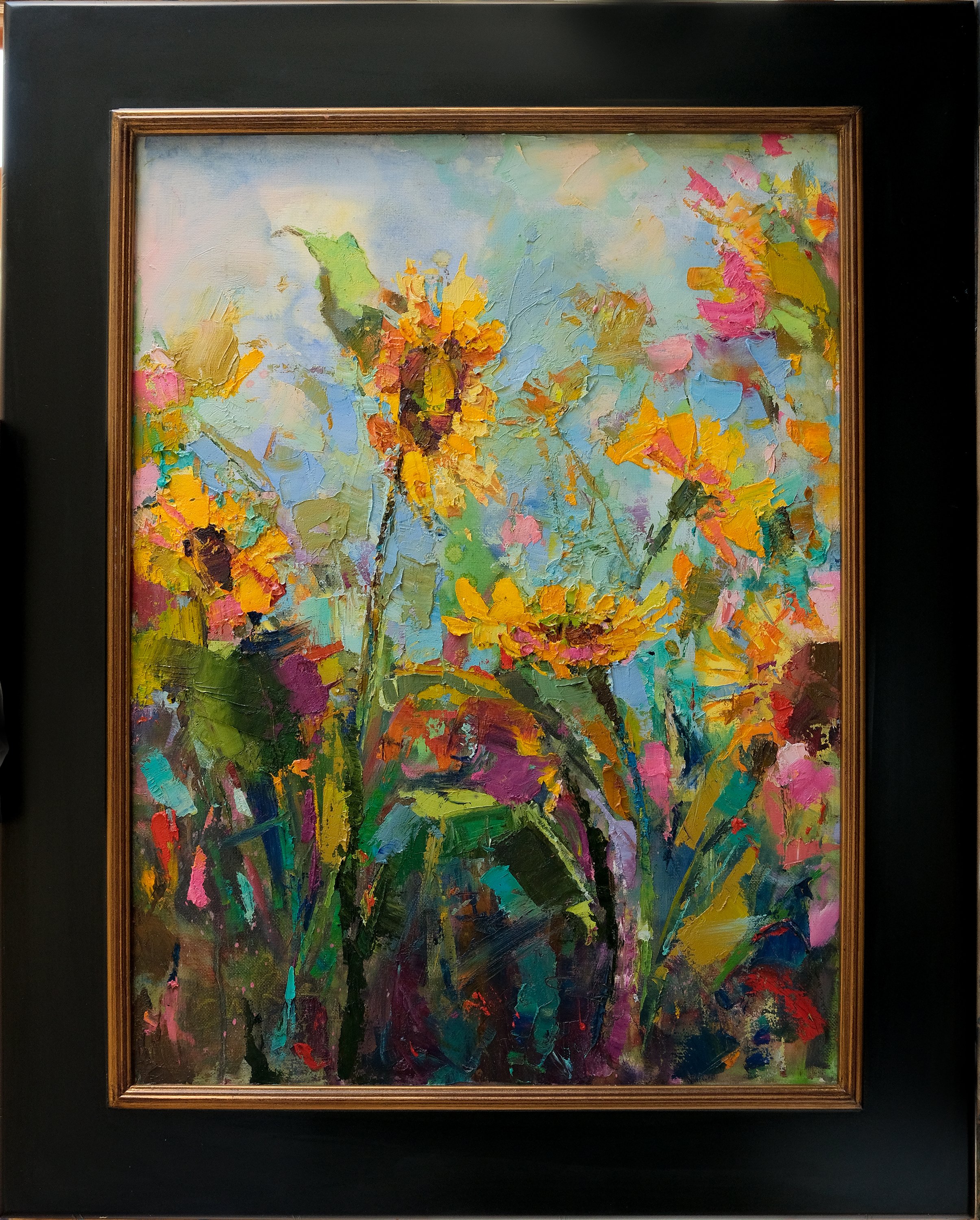
Here Comes the Sun, Oil, 18 x 24, (24 x 30) Framed, $1,600, Available
And reader, it was a triumph. My landscapes held their own, even in a room dominated by nature art of the highest caliber. I sold eight paintings, and absolutely none of them featured birds, retrievers, or crustaceans. And I did learn—I was gifted an education in duck decoy carving, collecting, and critiquing. I learned about the lineage of legendary carvers, and was astonished at this world within a world that I knew so little about. I learned that these beautifully carved birds can fetch tens of thousands of dollars. Six figures, even. Entire college educations, whittled into wood. These artists are extraordinary, and their passion is deep and generational. I gained a genuine appreciation for the art form, feeling both out of place and entirely at home—an honorary member of the great American waterfowl art tradition, sans camo.
But the dogs—oh, the dogs. I cannot overstate the presence of dogs here. Did I mention the hunting and retrieving exhibitions, including the famous competitions where Labradors take dramatic, cinematic leaps off docks, vying for prizes in height and distance? The dogs were fearless, oblivious to the cold, and performed feats part Cirque du Soleil and part track and field. Between events, these canine athletes wandered the streets, tails wagging, handlers beaming, occasionally pausing to tug their people into the art venues to exchange slobbery kisses for a pat on the head. I think my sweet goober Jake would have loved it there, as he is a true “dog’s dog.” He would have had zero interest in the cold plunge sports, but would have loved the lobster rolls.
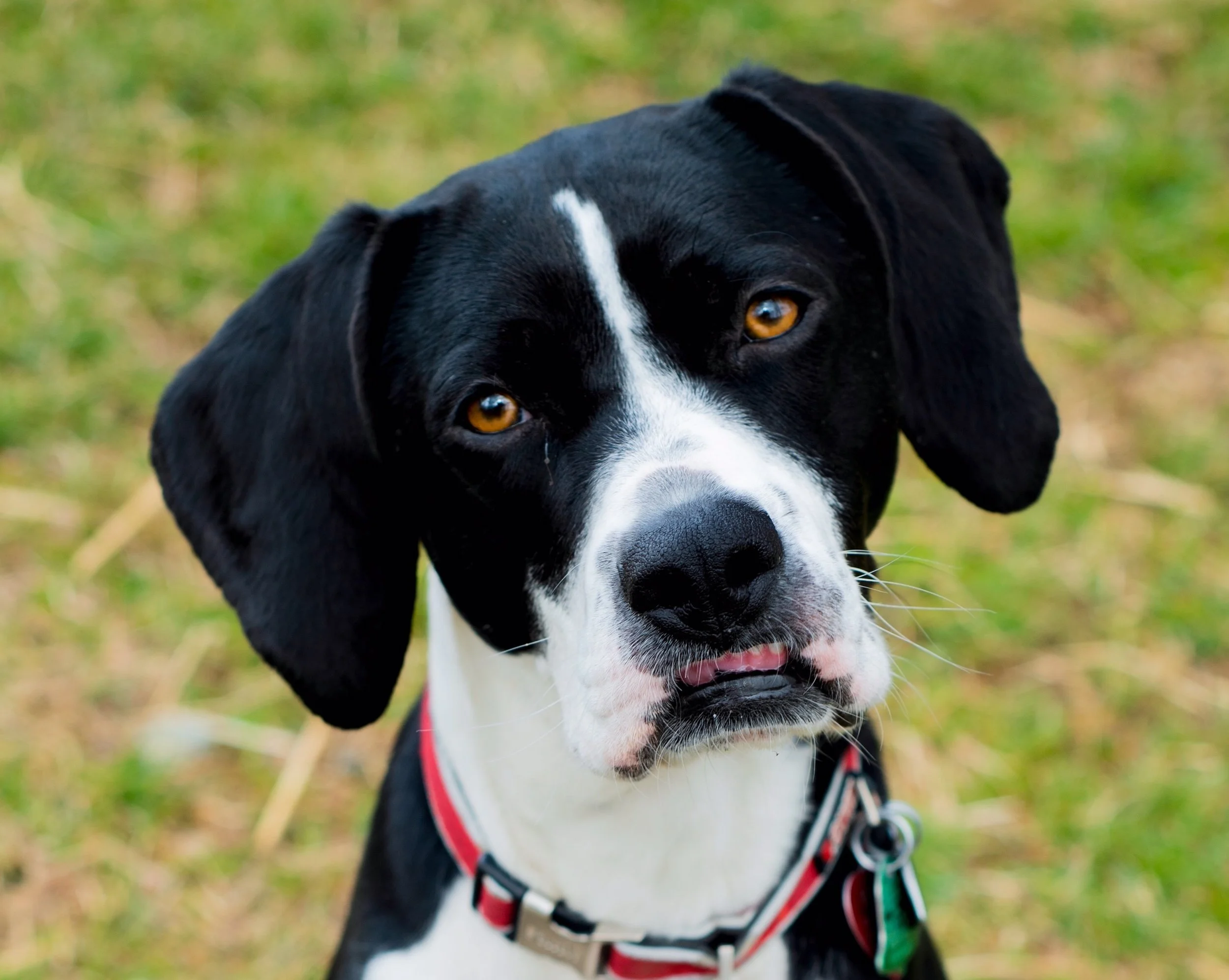
Studio Assistant, such a good boy, my Jake - more a pointer than retriever
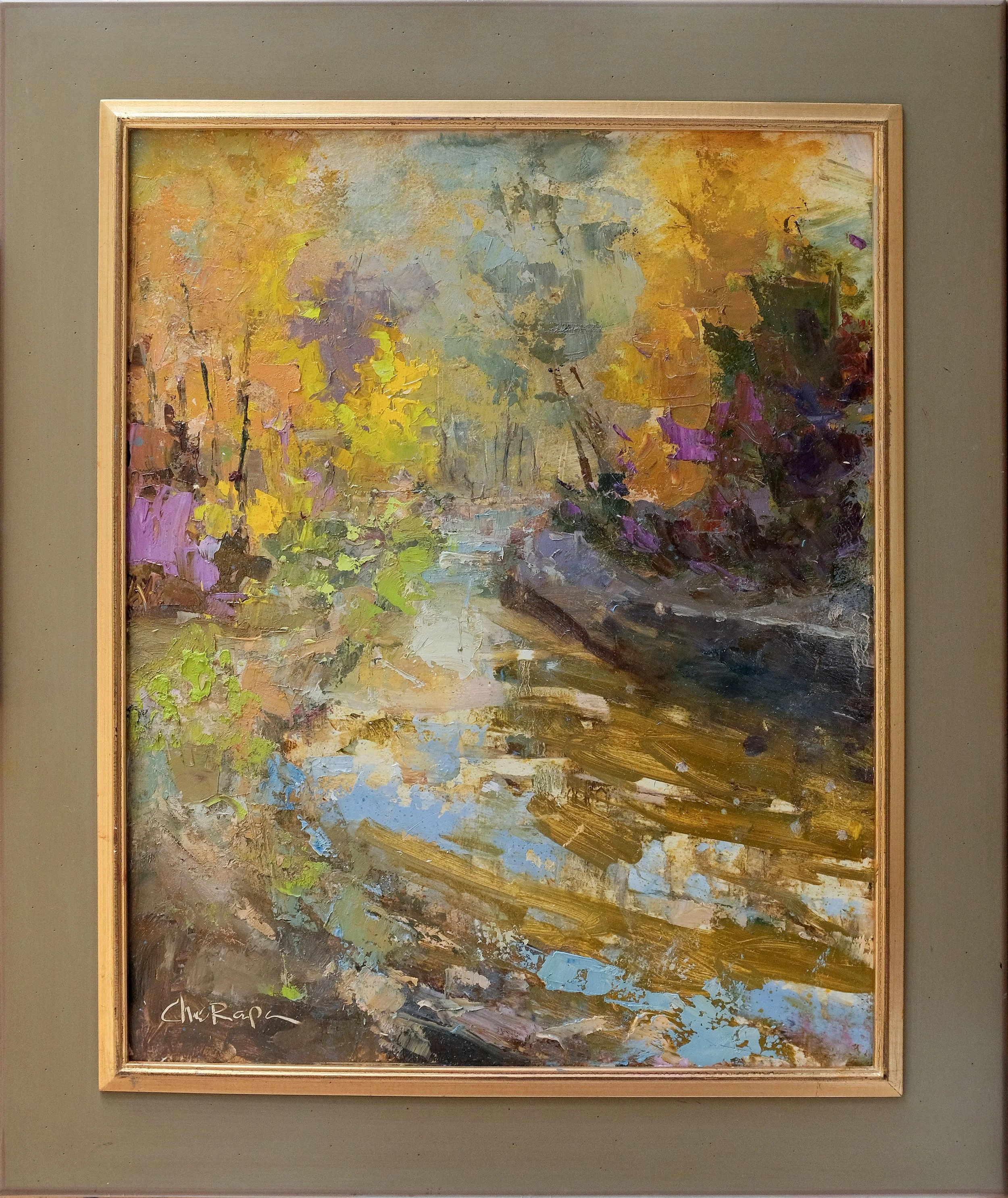
Finally Fall, Oil, 16 x 20, (22 x 26 framed) $950, Available
Festival Field Notes
I didn't personally leap off any docks, but I did have a few certified jump scares. No one warned me about the duck calls. Let’s start there. While chatting about my work with a visitor, a very, very loud duck exploded onto the scene, screaming its arrival. Not a polite quack, but the ruckus a duck might make when confronted by prey, or perhaps one of those athletic labradors. I had a brief, but memorable out of body experience. Obviously, (to everyone but me) this was a cellphone ringtone. I was only a little more prepared when it happened the next time…and the next. By the end of the weekend though, I was an old hat, and barely flinched when it happened the twenty seventh time. The volunteers and staff who run this event were extraordinary on a daily basis, and did not judge my naivete. Helpful, supportive, welcoming me as a newbie like a member of the family. Good people, making a wonderful event spectacular.
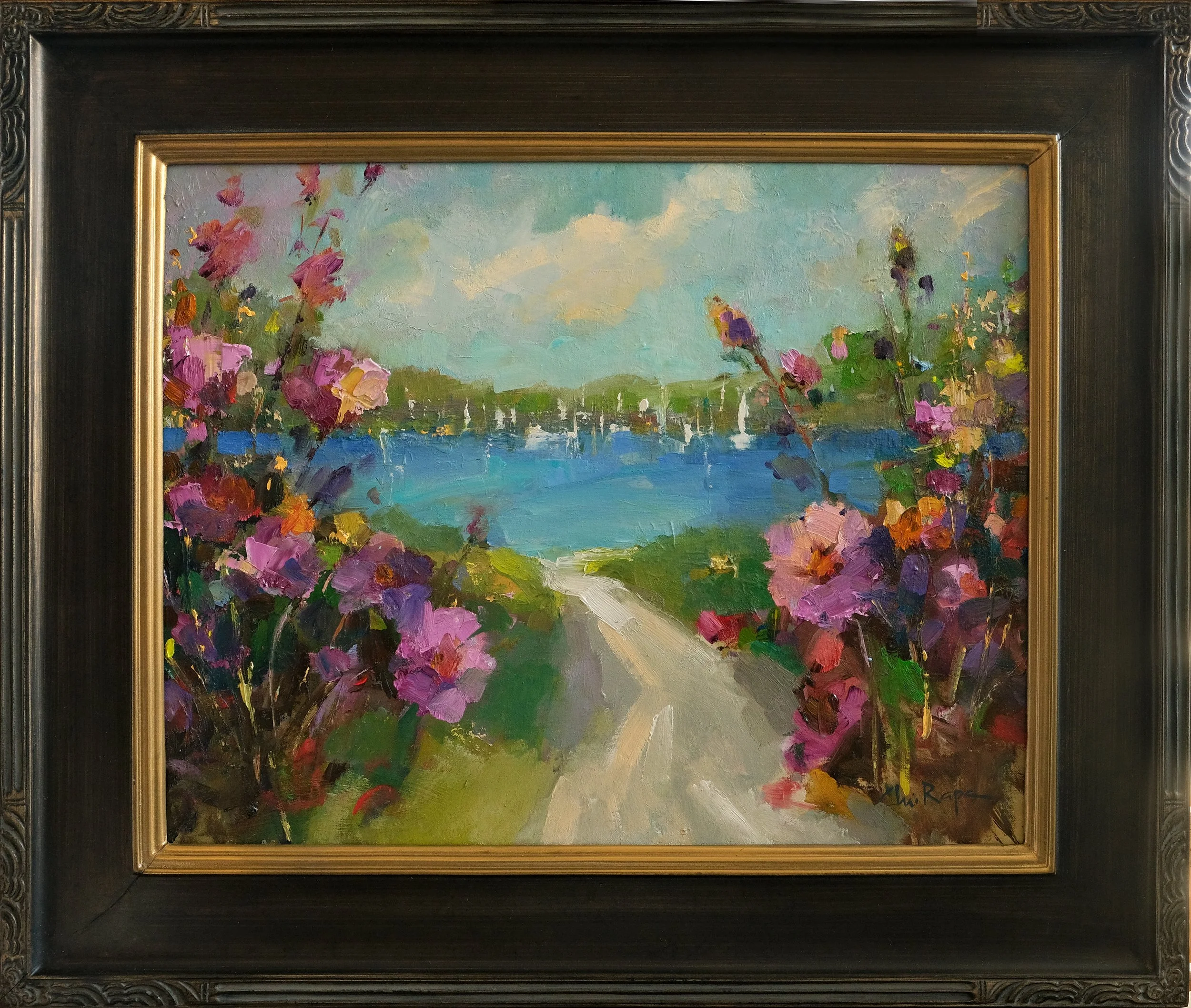
Colorful Cove, 20 × 16, Oil, (27 × 23 Framed) $950, Available
A Few Paintings Still Looking for a Home
All in all, it was a beautiful weekend, abundant with new friends and connections that will enrich my life and studio practice well beyond the festival. I was inspired, energized, and motivated to even consider the occasional bird in my landscapes. Thankfully, many pieces went to their forever homes, but some of my favorites did not find their people this weekend. Sunflowers, farm scenes, and local landscapes painted in the light I adore, they’re still with me, patiently waiting. I thought these four especially would be among the first to go—but art has its own mysterious matchmaking process, impossible to predict. With the holidays approaching, these paintings would make wonderful gifts—either to someone you love or, if you’re feeling particularly festive, to yourself. I’ve included details, please email me if you would like to know more.
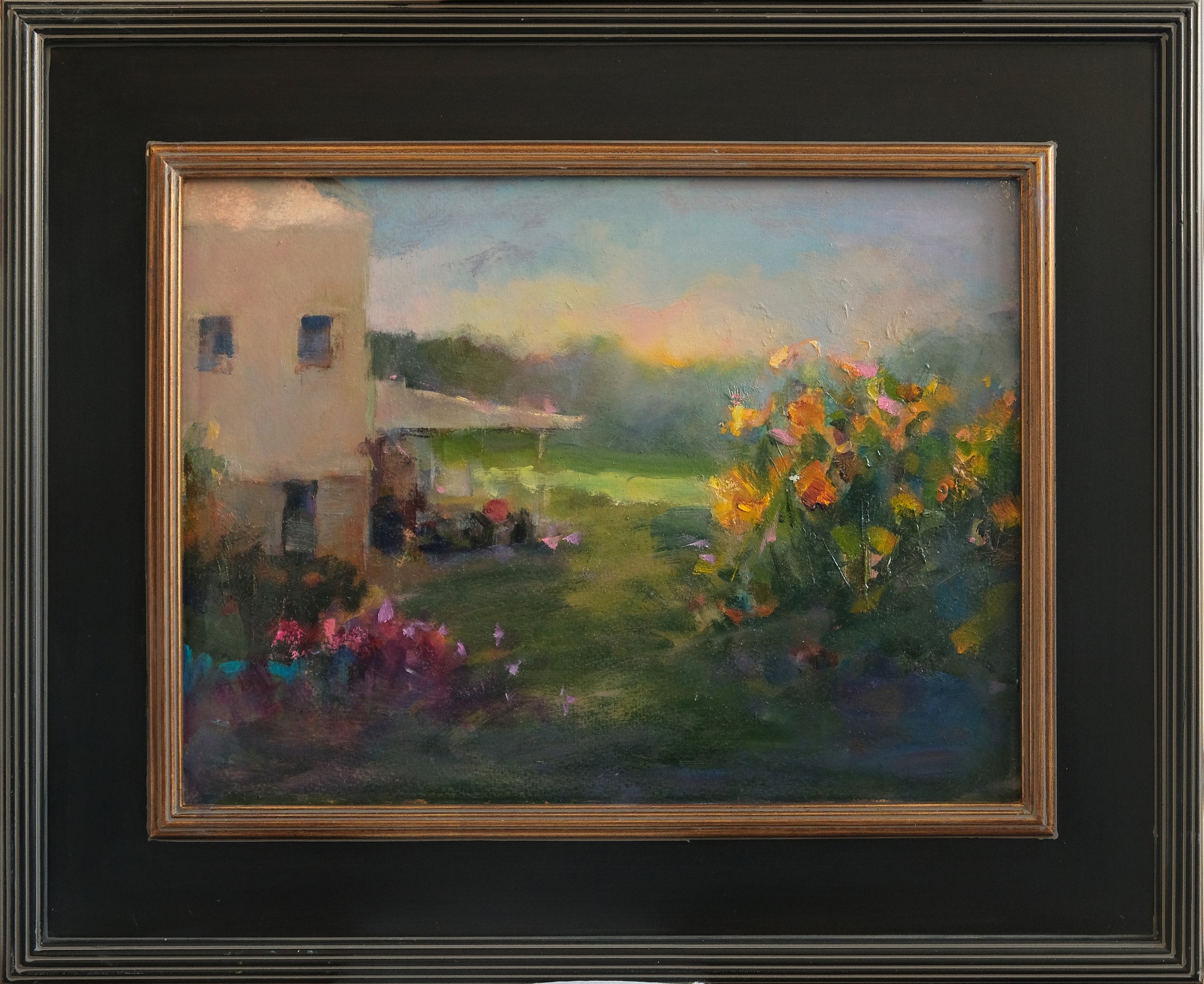
Rise and Shine, Oil, 16 × 12, (23 × 19 Framed) $625 Available
Moving on from Waterfowl, amidst the changing colors and light, and on the cusp of Thanksgiving, I am reminded that for everything there is a season. A season to celebrate the birds, and a season to dress and stuff those birds. A season to laugh, a season to cry, a season to start a painting, and a season to throw that painting in the trash. More about that next time!
Happy Holidays and Blessings to all,
Chris

My Painting Pilgrimage to La Romita
I learned that bug spray is not optional, and that even the stray cats of Italy are chic. Mostly, though, I learned that painting in Italy is an act of joyful humility. The light is too perfect, the vistas too vast, and the silvery greens too elusive to ever feel like you’ve fully captured them. As Titian once said, “Art is not to be learned, but felt.” And in Umbria, I felt it.

My room had a spectacular view!
"You may have the universe if I may have Italy."
Giuseppe Verdi

Confession: when I told people I was heading to Umbria, Italy for ten days to paint, I only “kind of” knew where Umbria was. Turns out, It’s that gloriously pastoral region in the middle of Italy, where the hills almost paint themselves. My destination was La Romita, a converted Capuchin monastery that now hosts artists instead of monks. The days were sunny, but not too hot, the skies clear and blue, and the evenings had a soul soothing coolness to them that felt like a dream. This was Umbria? How did I not know about this place sooner?
Arrival: The Art of Jet Lag
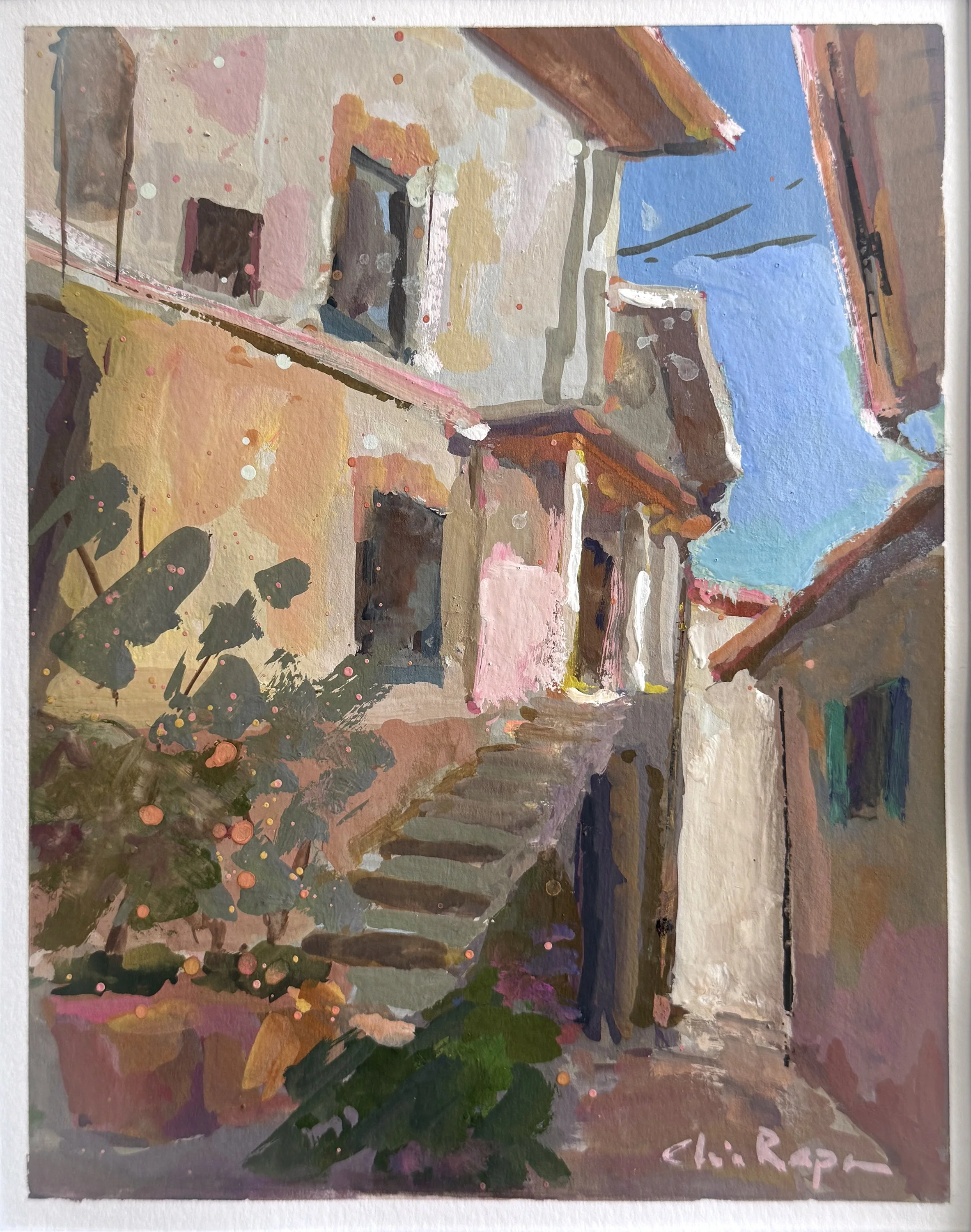
Stroncone in Gouache
My travel companions were fellow members of the Washington Society of Landscape Painters…a group I still pinch myself to be a part of. We convened in Rome, some having come early to sight-see, others arriving just in time for the shuttle. Once on the road to La Romita, we got right down to the business of comparing paint brands and colors, discussing our set ups, and talking over itinerary options. By the time the dinner bell rang, we had a plan. What happened next isn’t exactly clear; I either suffered a bit of jet lag, succumbed to an allergy attack, and/or drank too much wine. In any case, on the morning of day 2, I was not well. I skipped the morning excursion, took a borrowed Zyrtec, and went back to bed. It was the best decision ever. I woke in time for a late lunch feeling exuberant. My advice to you beloved, whether at home or abroad, take a nap if you need one.
But We Came to Paint
All settled in and rested up, it was time to paint. We painted in big towns: Assisi with its lovely pink stone, and Orvieto, all geometry and drama with a Duomo so ornate it made my (only recently clear) head spin. We painted in small towns, Montefalco, “the balcony of Umbria,” Lake Bolsena, so many boats, Marmore Falls, so much water, Todi, so much gelato…you get the idea. The perfectly preserved medieval town of Stroncone was my favorite though. Perched on what can only be described as a vertical incline, it was seemingly uphill in every direction, and ruled by stray cats. The angles and perspectives were dizzying, but they had the most charming front gardens and it was impossibly picturesque. Even the laundry on clotheslines high above the cobblestones appeared to have been color coordinated by town ordinance. I was smitten. I want to live there.
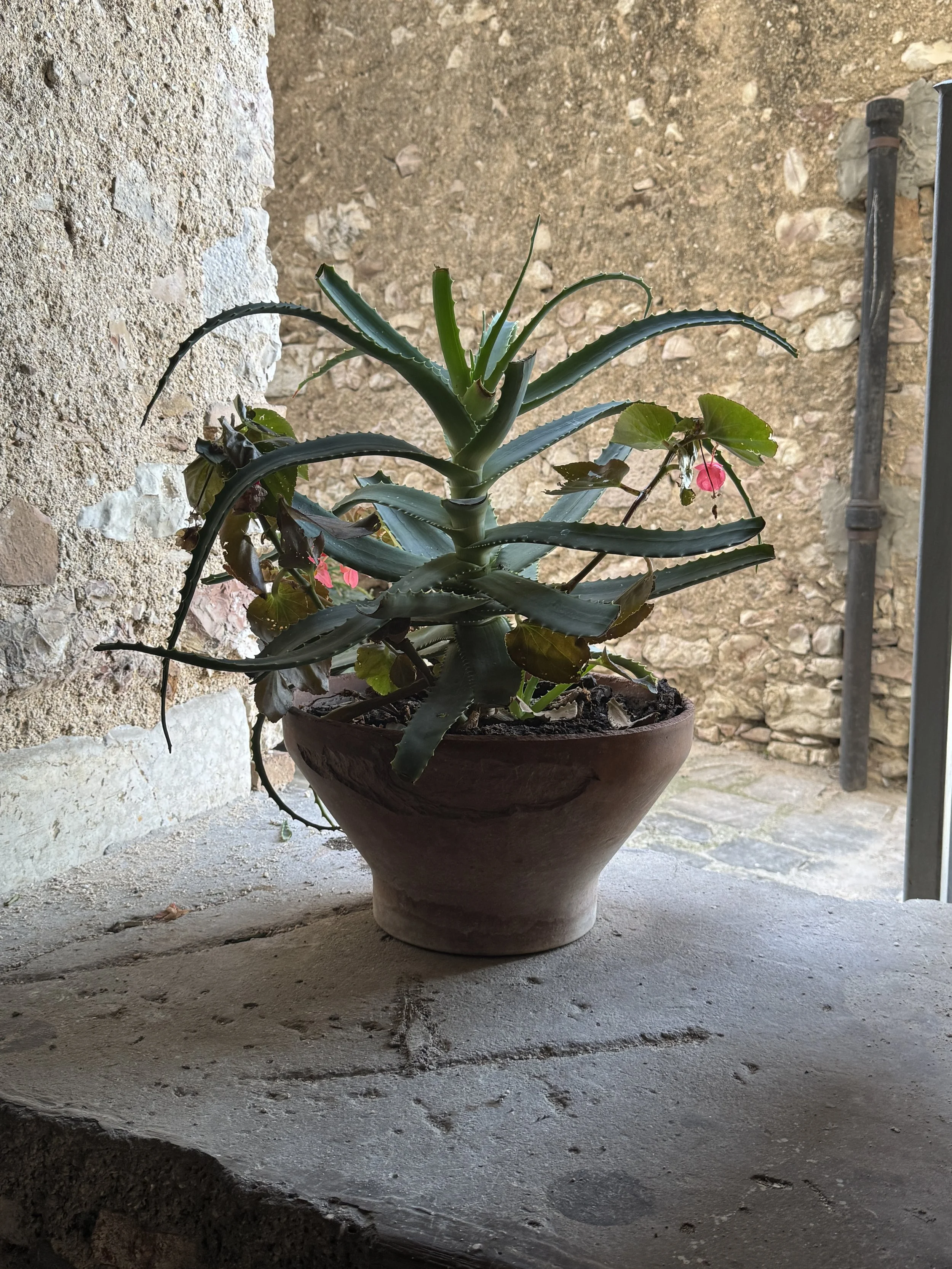
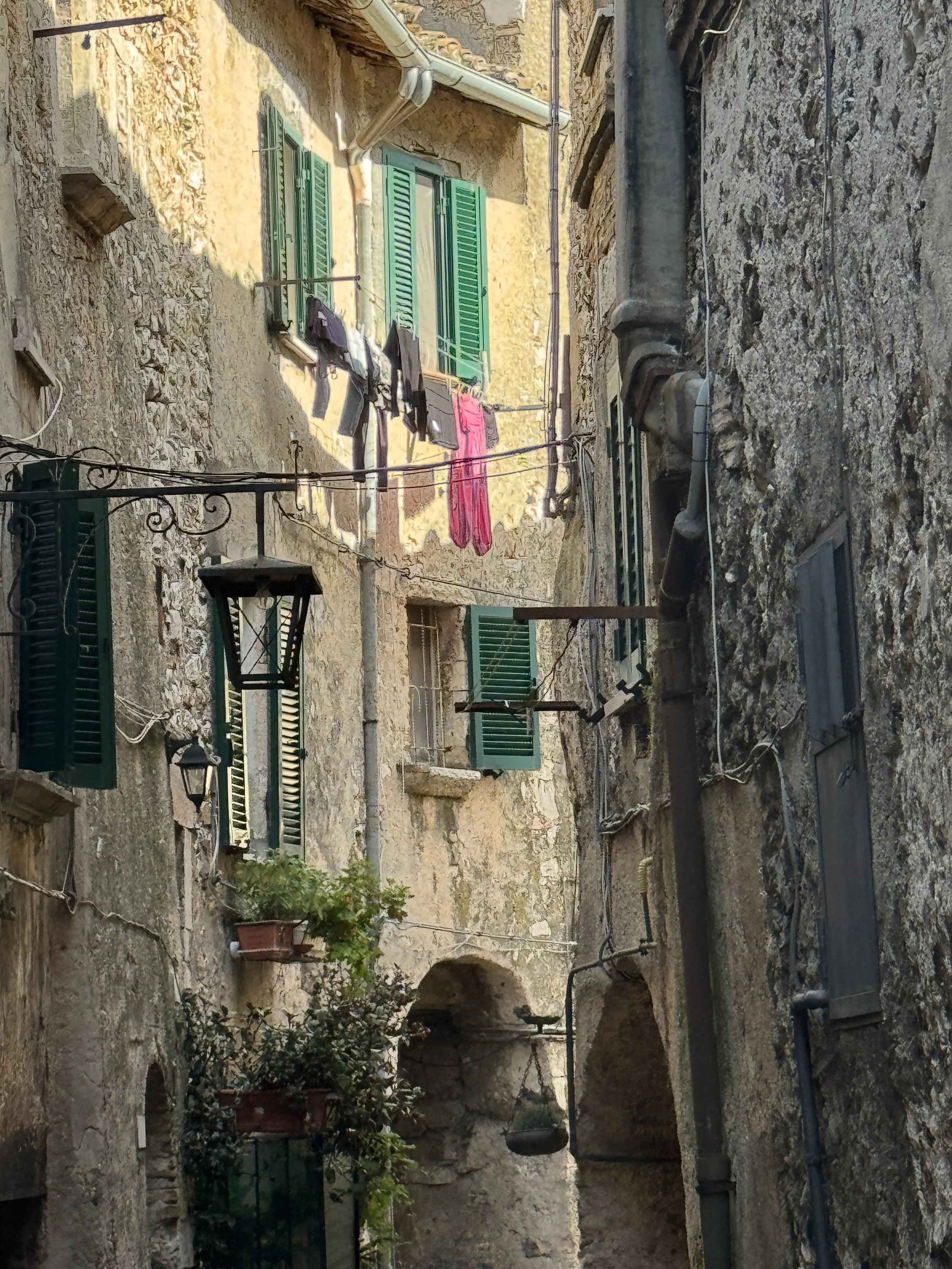
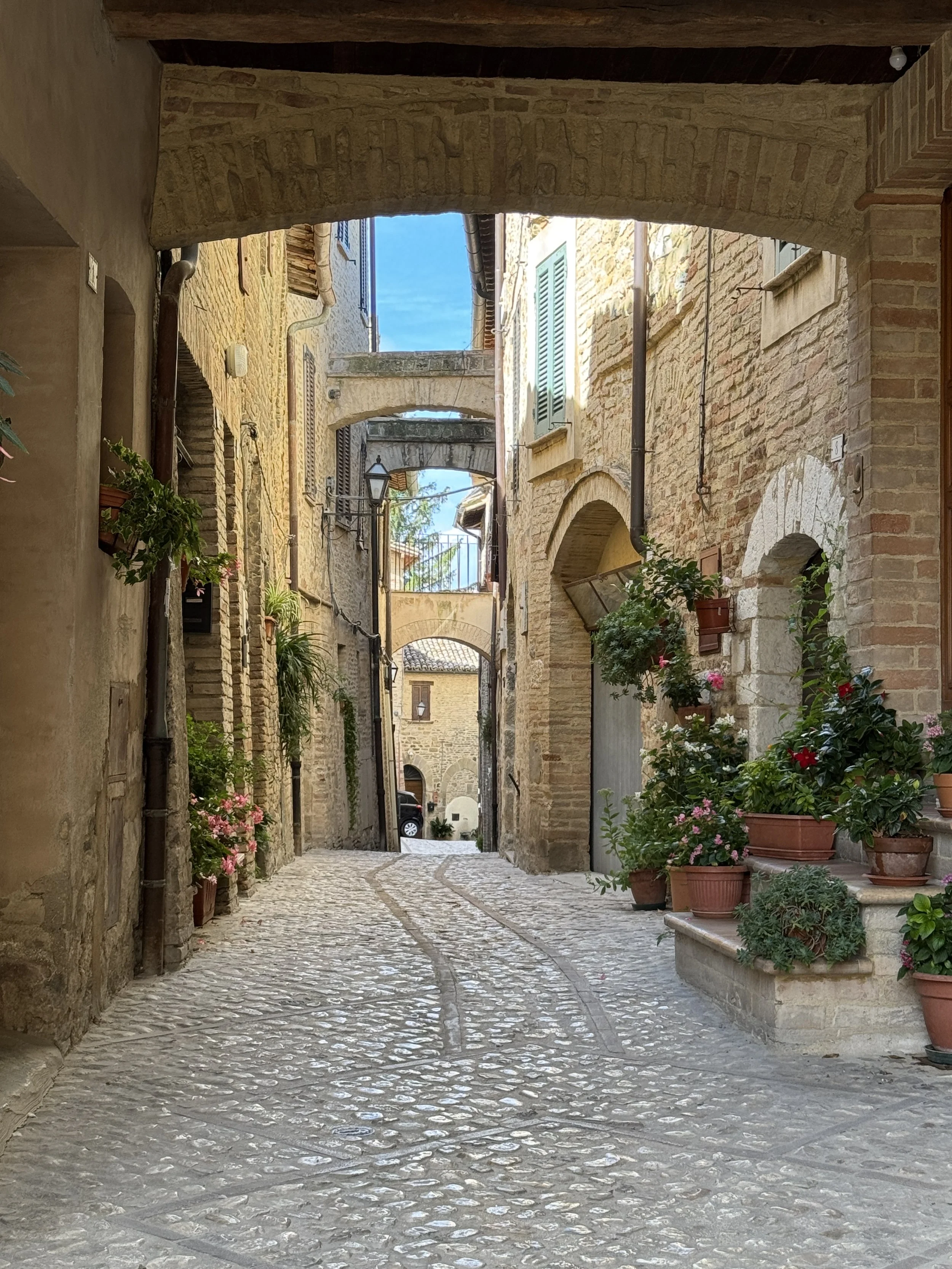
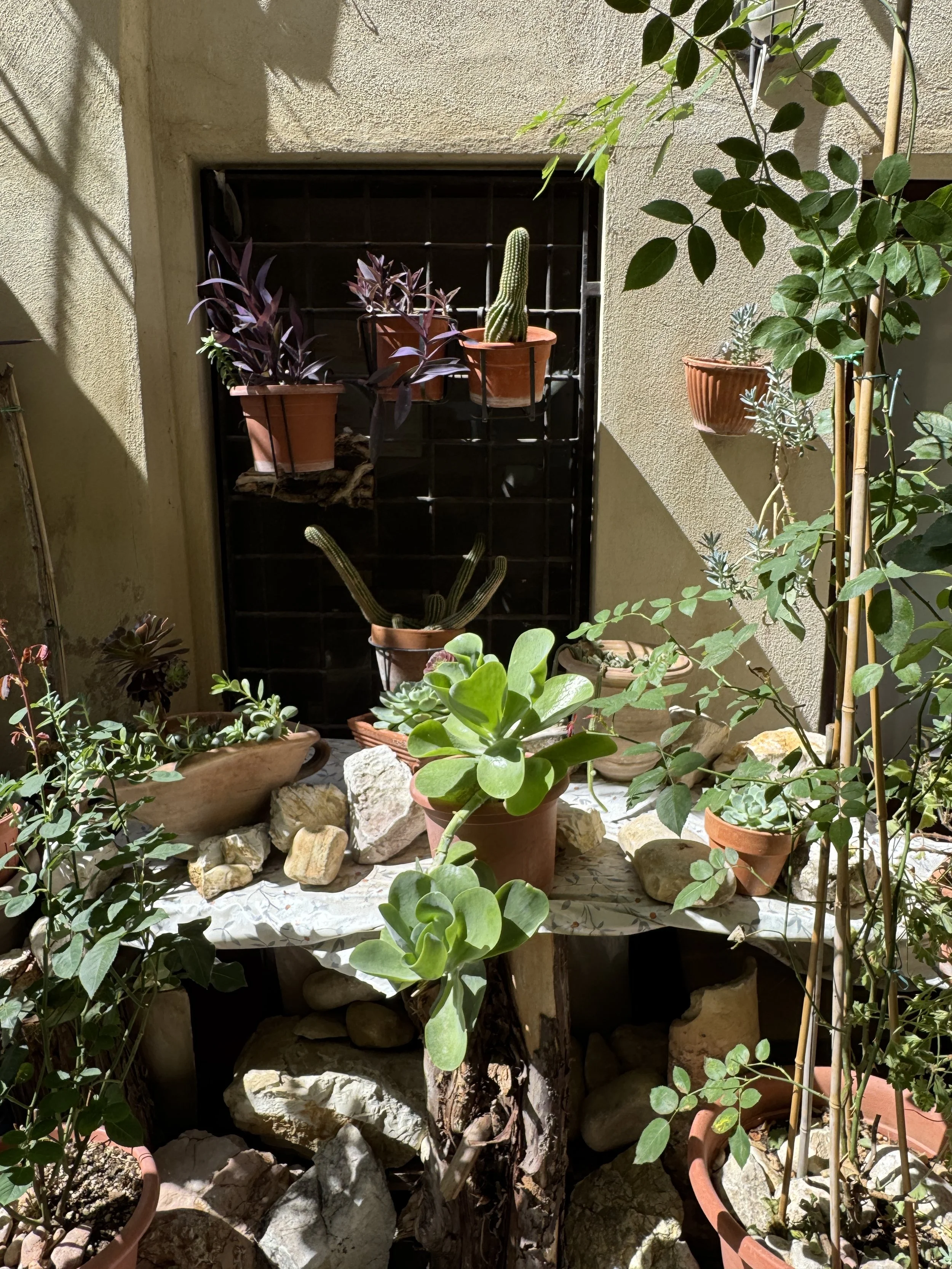
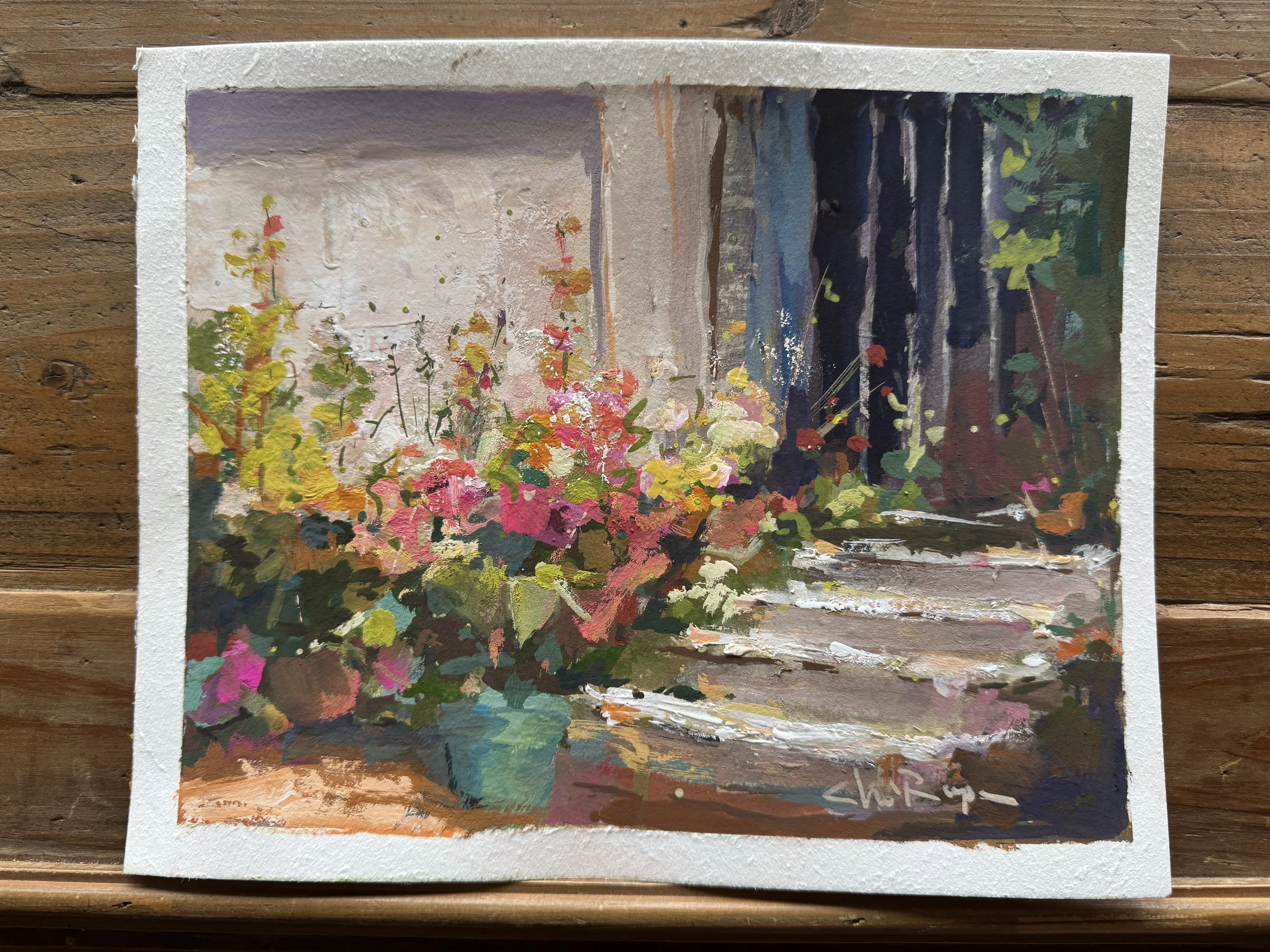
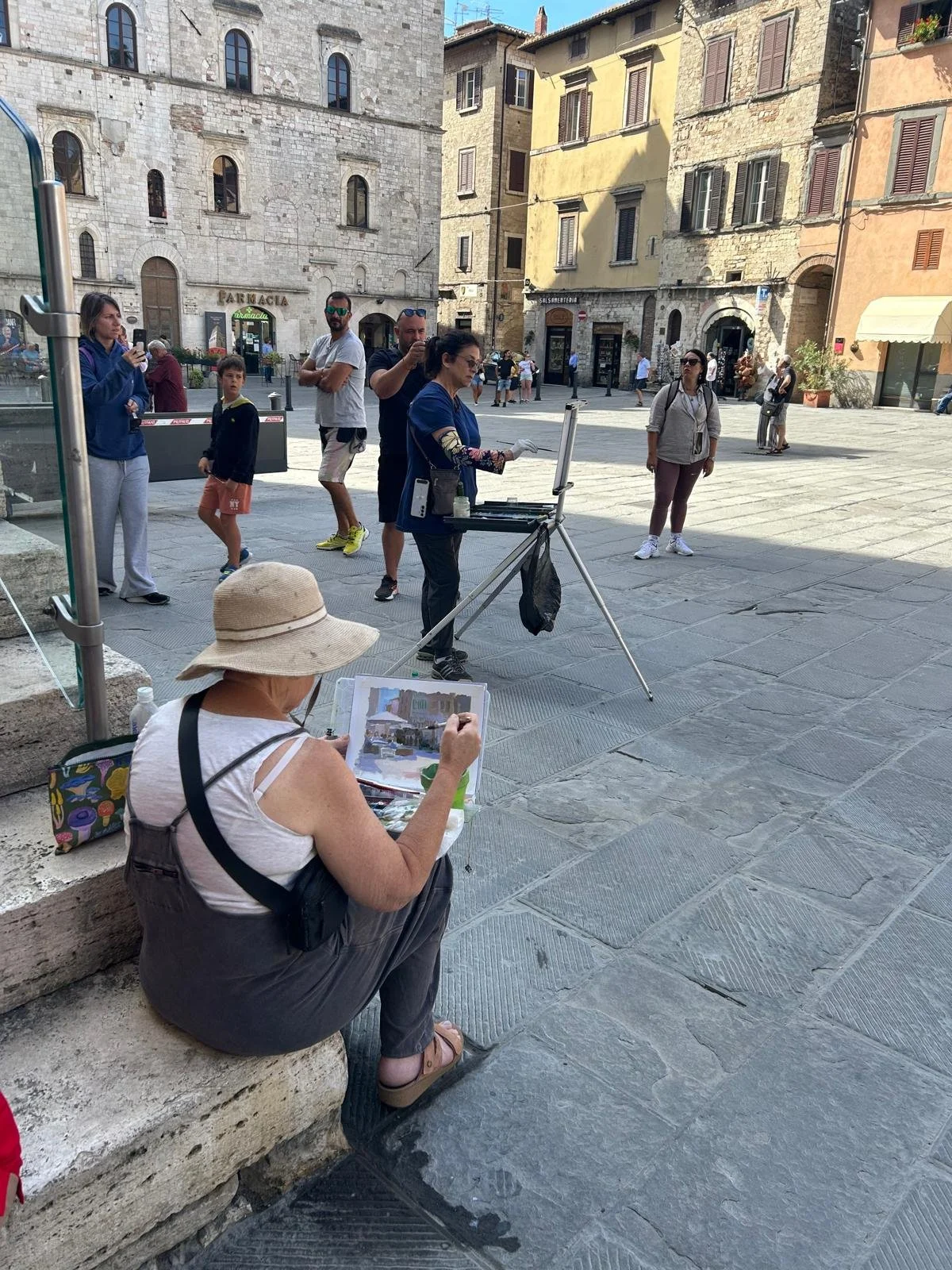
Sitting on the steps to paint in Todi
Our Daily Itinerary:
Arrive in enchanting hill town
Visit the most beautiful church. Pray.
Walk cobblestone streets in the shadows of actual Saints
Find somewhere to paint
Feel both energized and woefully inadequate
Paint anyway
Eat gelato
Back at La Romita
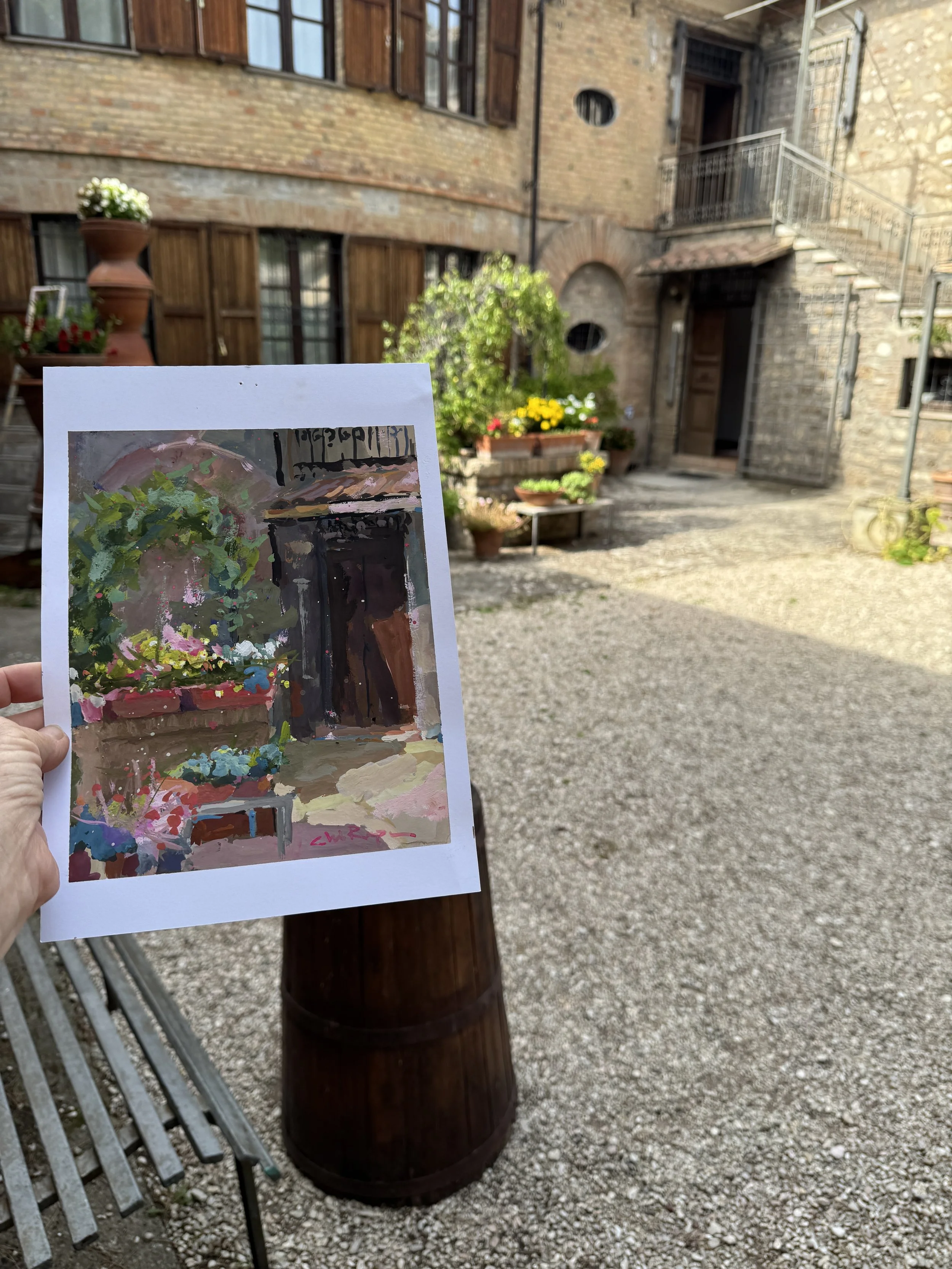
Between excursions, we painted flowers and courtyards, amongst the butterflies and bees, chaperoned by Blondie and Carmello, the two stray dogs adopted by our Italian hosts. Meals were served family-style, which is Italian for “we will keep feeding you until you cannot breathe.” Conversations flowed from art and philosophy to current events, then back to art, and artists we love, (and some we don’t). We laughed, told tall tales, debated, and even occasionally agreed to disagree. Our dinner conversations were as nourishing as the food, and one of the best parts of the trip.


Lessons Learned
I learned that I should have done more time on the treadmill before tackling Italy’s hill towns. I learned that “un po’ di vino” means “just enough to lose your footing on the cobblestones.” I learned that bug spray is not optional, and that even the stray cats of Italy are chic. Mostly, though, I learned that painting in Italy is an act of joyful humility. The light is too perfect, the vistas too vast, and the silvery greens too elusive to ever feel like you’ve fully captured them. As Titian once said, “Art is not to be learned, but felt.” And in Umbria, I felt it.

The road to La Romita
Coming Home
When our ten days ended, I was ready to come home, but also not nearly ready to leave. We had gotten to know each other, come to love our Italian hosts, and developed a deep appreciation for the pace of Italian life. Back in Maryland, as I paint my landscapes and still lifes, I see traces of Umbria everywhere. Tiny bits of warm rose, ochre and olive-tree greens sneak into my work, unbeknownst to me, and remind me not to forget.
There is something about painting in a place with so much history. It rearranges your sense of color, time, and what is actually important. Family is important. Painting is important. Community is important.
I’ll go back; maybe not next year, but certainly I will go back.
Until then, Ciao.
Chris

Lighten Up
Whether plein air painting, or otherwise enjoying nature, getting out, and sometimes away, is good for the soul. Along with just the few true necessities, set out with an open mind and you will surely return with an improved outlook. Travel light, and bring back your memories as souvenirs, having looked and actually seen.

“He who would travel happily must travel light.”
–Antoine de Saint-Exupery
Plein air painting vacations, or “paint-cations” as I hear them called, are a real thing; you can travel the world with like minded creatives to eat, drink, and make art. Sip Bordeaux and paint a chateau, or smoke Cubans and paint Havana—there are groups leaving every ten minutes. Want to experience the stress of painting outdoors, while camping, and being stalked by actual lions? I think they are calling that trip “September on the Serengeti” and its filling up fast. In a tent, on a boat, at the north pole or below the equator—if you can dream it, you can paint it.
I love to travel, and was born to paint, so I actually love the paint-cation trend—in theory at least. Turns out, the packing is an issue. I have a friend who I am certain could head out on a three week safari with nothing more than her Luis Vuitton cross body bag and a Pashmina. But I am not that woman. I travel like a refugee. Basically, with my whole world bungy-corded to multiple, bulging at the seams mismatched bags. Well, I used to travel that way; now older, and more banged up, I am reformed.
Back in the day, I cared little that “carry-on” typically means that you are able to CARRY the bag on to the plane, and not have to drag it like a dead body. As I prepared for my recent painting excursion to Mexico, I reconsidered. I would pack neat and light, taking not one tic-tac more than I needed. Along with clothes and travel sized toiletries, I figured I needed my plein air setup, a limited palette of paint, (extra white) a few brushes, surfaces to paint on, a hat, and bug spray—lots of bug spray. I got a decent bag to carry it all, a Kelty Redwing 44 backpack, which I highly recommend. I looked like a straight up geek with the hip and chest straps fastened, but it honest-to-goodness distributes the weight and saves your back and shoulders. With my backpack, a modest roll on to check, and the sickening conviction that I would dearly miss the many supplies I left behind, I set out.
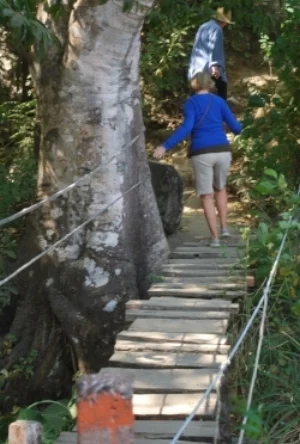
Another footbridge we used. SKETCHY!
I chose this particular trip mainly because of Jim McVicker, the *real deal* in plein air painting, and our instructor for the week. However, I was also charmed by the online images of the rustic fishing village setting where he would teach. I glossed over the fine print which urged being fit enough to manage steep and rocky terrain. I was likewise unconcerned that access to our Casa required wading across a river or traversing a foot bridge that appeared to have been assembled with used wood crates and ordinary kitchen twine.
That said, I am not a camper, nor a hiker. I can manage a ball cap or a straw hat, but I don’t have the right kind of hair to wear a helmet, so I am not inclined to pedal or row or rappel my way to a painting location, no matter how magical it is. I applaud the “extreme” plein air painters out there (you know who you are) but nature is dirty, and there are ticks, so I compromised. The venue, Casa de Los Artistas, offered comfortable enough accommodations, lovely al fresco meals, and an awesome open air art studio. It was nice but not fancy, a good fit for the week I envisioned.

Next time I'll splurge on a nicer apron!
Our first afternoon out on location at Boca de Tomatlan proved a good measure of my packing. My extra lean kit met the test, and surprising even myself, all I really lacked were a few pesos for beer. Luckily, my fellow artists chipped in, and we quenched our thirst with ice cold cerveza, delivered to our easels on the beach. It was heaven. With each excursion through the week, I challenged myself to take even less in my kit; by day 7 my spirit and my pack were noticeably lighter, and I the better for it.
Packing light is like just about every other sensible thing in life. Simple, but not easy. A lifetime ago, I was an actual camping-and-cookie-selling Girl Scout. In the subsequent years, I have packed for every scenario in my travels. Wiser now, being “prepared” pretty much means bringing a good flashlight and more cash, not more stuff. So, with one international travel workshop under my flipbelt, I will advertise myself as an expert. My packing advice is to be ruthless. Leave behind the gun and the canolli. If you are not a Godfather fan, nevermind. A paint-cation is not the time to take all the tubes of paint with names you can’t pronounce and have never used—that manganese blue will just weigh you down. In traveling generally, you need less of everything than you think. Accept that you may leave some “nice to haves” at home, but embrace the concept of plein air painting without lower back pain. It is a fair trade off..
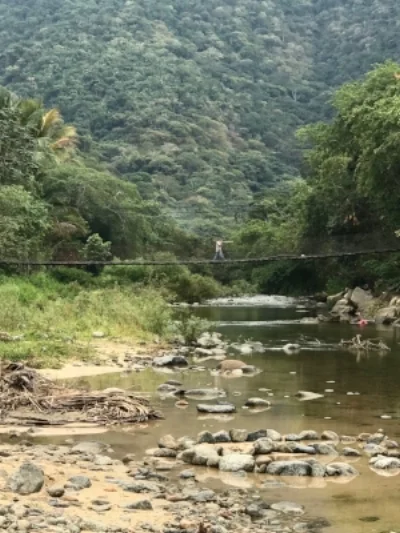
The narrow, creaky, and swinging bridge to our Casa
Whether plein air painting, or otherwise enjoying nature, getting out, and sometimes away, is good for the soul. Along with just the few true necessities, set out with an open mind and you will surely return with an improved outlook. Travel light, and bring back your memories, and paintings perhaps, as souvenirs, having looked and actually seen. I will leave you for now with a few resources I found helpful, and good counsel from Thoreau:
Our life is frittered away by detail...simplify, simplify.
Till next time,
Chris
Kelty Redwing 44 - "carry on" size backpack
Coulter - My other plein air easel - Love this!
Daytripper - Jim's even lighter easel
Kathleen Dunphy - Using a limited palette

First Drafts
I am a huge fan of Anne Lamott. Huge.
In her book, Bird by Bird, Anne offers instruction and her observations on writing: how to write, what to write, and why we write. However, In virtually every passage, you could substitute “painting” for “writing” and have an excellent survival guide for the visual artist.
I am a huge fan of Anne Lamott. Huge.
In her book, Bird by Bird, Anne offers instruction and her observations on writing: how to write, what to write, and why we write. However, In virtually every passage, you could substitute “painting” for “writing” and have an excellent survival guide for the visual artist. In both writing and painting, I have felt the passion, panic, isolation, euphoria, (insert every other emotion here) and creative paralysis she describes. In fact, reading this book the first time, I was sure she was writing about my real life insecurities as a painter, transcribed from the actual running dialogue of voices chattering away in my own head at any given time. Downside--clearly I have issues. Upside--Bird by Bird is choc full of good advice.
So what does this have to do with you or me or our painting?
Well, I am a competent painter and have a lot of "brush miles" but I realized a long time ago that growing as an artist would require more than just sharper technical skills. So, I developed some practices that have helped me be productive, despite my natural disposition toward procrastination. They are more coping strategies than disciplines, but they work—and many of them came from Bird by Bird.
One of the most useful of Anne’s instructions, for me anyway, is to write (think paint) what she calls a “shitty first draft.” I paint almost daily at home, but arriving in Mexico for my workshop with Jim McVicker, an artist whom I admire greatly, I felt overwhelmed. Of course, I was super excited about my first big Plein Air painting trip, but the lapping waves, breezy palms, sunshine, and other nice workshop attendees just set me on edge. I mean, it was a dream to get out of freezing Maryland in January, but after about ten minutes, I realized that I had no idea what to do. Paint the boats? The beach? One of the hundred or so stray dogs? No idea.
Jim’s first morning demo was on the beach. He made quick work of the pretty little scene outside our casa, and made it look easy. Still, I don’t paint a lot of tropical boat scenes back home in Maryland, and felt like I needed something a little familiar to warm up with. I wandered around for what felt like 2 hours, musing about why I signed up for this workshop to begin with, and how else I might fill my days here in Boca if I abandoned the idea of painting altogether. Crazy, right?

Anne teaches her writing students that the best thing to do in a situation like this, (maybe after you go pee and get a snack, but before you lose nerve) is to bang out a “shitty first draft.” Don’t chase perfection down some rabbit hole, wax poetic here, or get twisted up with every SAT word you know—just get the gist of what you need to say down. Now, Anne’s writing is amongst the truest things I’ve ever read—in my estimation, right up there with the Bible and Thoreau. So, I have a hard time believing that she writes a “shitty first draft” or "shitty" grocery list, or less-than-inspiring anything else. Nonetheless, she says this is what she does, and she is kind of my Yoda, so for years now, whether writing or painting, I have done the same.
The image to the right is my first “draft” of the workshop--a regrettable study in orange and mustard--and worse in person than the photo portrays.
I am sharing it because:
- I am really committed to this concept—and I am sure it works
- My paintings got a lot better after this one
- I think we have to own the crappy ones along with the good ones—its healthy
Eventually, I settled on my spot and set up my gear. I started out thinking about how Jim paints, kind of forgetting how I actually paint, and making a mess of it almost immediately. Where Jim’s painting looked fresh and bright, mine looked like I had dropped it face down in the sand—and then kept going. My paint was tacking up too fast. My boats were too big. My hat felt too tight. Still, I persisted.
Over the course of the week, I had a couple of false starts, but forged ahead, building on the one or two useful bits from that first “draft.” The sky wasn't bad; I liked the gesture of the palms. My last painting of the week, below, was from roughly the same spot where I started. I had worked out my color palette, a little shorthand for the palm trees, tightened up my focal point, and generally sorted out how I wanted to handle the energy and color of this hustling fishing village. My work was starting to feel like this place, sharing a lot of the truth without all of the facts. You can see my other Boca paintings here.

Whether we tell our stories in print or in paint, we have to start somewhere. We have to bleed out the fear of failure, shush our inner critic, and overcome the spirit crushing compulsion to be perfect. We have to do this over and over and over until we have something we don’t hate. If we are lucky, we pick up some tricks to help along the way, and take comfort knowing that we are not alone in our struggles. Painting really is so very much like writing, and I highly recommend Bird by Bird if you are looking to grow. Thanks Anne.
My next post will address some practical considerations for international art travel, ala “leave the gun, take the cannoli.“ Spoiler alert, I wish I had taken a bigger can of bug spray.
Til then,
Chris
